 Home
HomeHome / GTC Shanghai 2026 - Complete Exhibitor Guide
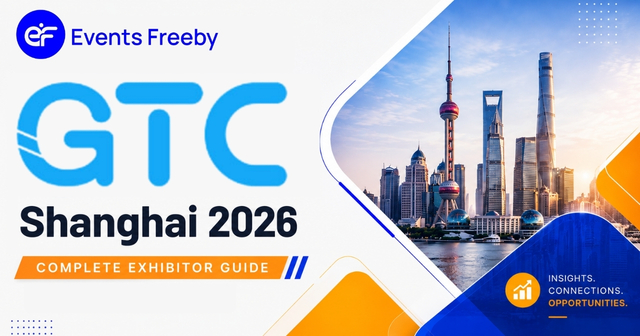
GTC Shanghai 2026 - Complete Exhibitor Guide
Posted By: Eventsfreeby Blogger
Last Update : Jun 22, 2026



 Copied!
TL;DR (Too Long; Didn't Read)
Focus Keyword: GTC Shanghai 2026 exhibitor guide Primary Keywords: GTC Shanghai 2026 booth, exhibit at GTC Shanghai, GTC Shanghai exhibitor registration Secondary Keywords: Global Traffic Conference Shanghai 2026, GTC Shanghai booth pricing, GTC Shanghai venue, GTC Shanghai dates, cross-border ecommerce exhibition China, AdTech exhibitor guide Asia, Shanghai World Expo Exhibition Center, GTC Shanghai vs Shenzhen
GTC Shanghai 2026 runs November 4–5 at the Shanghai World Expo Exhibition and Convention Center in Pudong. It is the larger, more internationally attended edition of the Global Traffic Conference, organised by Baijing.cn since 2017, expecting 200+ exhibitors and 20,000+ attendees across 15,000+ square metres of exhibition space, with platforms like TikTok, Meta, Google, and major cross-border payment and SaaS providers expected based on previous editions. The exhibition is structured around three zones — Cross-Border E-Commerce Solutions, Game Publishing and Development, and Traffic Acquisition and Digital Marketing. Booth pricing for the Shanghai edition has historically ranged from standard 3x3m zones to larger raw exhibition space, with options to suit first-time exhibitors and established platforms alike. This guide walks through everything an international exhibitor needs to know — booth types and pricing, the registration process, what to expect on the floor, how to prepare for Chinese customs and logistics, and how to actually generate qualified pipeline from your two days in Shanghai. EventsFreeby manages the complete exhibitor journey for GTC Shanghai — booth design, freight, customs clearance, and on-ground support.
So You're Thinking About Exhibiting at GTC Shanghai
If you've made it to this page, you're probably past the "should I attend GTC" question and into the more practical territory of "okay, how does this actually work."
That's a good place to be. GTC Shanghai isn't a complicated event to exhibit at, but it is an international one — which means there are a handful of decisions and logistics steps that are different from setting up a booth at a domestic trade show. Get them right early and the two days in Shanghai run smoothly. Get them wrong, or leave them until the last minute, and you'll spend the first morning of the event chasing freight paperwork instead of meeting prospects.
This guide is written specifically for that gap — the practical, slightly unglamorous part of exhibiting internationally that nobody puts in the conference brochure. We're going to walk through exactly what GTC Shanghai is, what your booth options look like, what the registration and approval process involves, what the exhibition floor is actually structured like once you're there, and what it takes to walk away from the two days with something more useful than a stack of business cards.
Let's start with the basics.
What Is GTC Shanghai, Exactly?
GTC stands for the Global Traffic Conference. It's been running since 2017, organised by Baijing.cn — a well-established Chinese cross-border business media and intelligence platform with a built-in, highly engaged audience of companies focused on international digital growth.
There are two annual editions. Shenzhen, held in April, tends to have a slightly more domestic, gaming and app-development flavour. Shanghai, held in November, is the larger and more internationally attended of the two — and it's the one this guide is about.
GTC Shanghai 2026 is scheduled for November 4 and 5, 2026, running at the Shanghai World Expo Exhibition and Convention Center in Pudong New Area. This is one of China's premier exhibition venues, built as part of the World Expo legacy infrastructure, with modern halls, strong metro connectivity, and the kind of facilities you'd expect from a venue that regularly hosts large-scale international trade fairs across multiple industries.
In terms of scale, GTC Shanghai typically brings together over 200 exhibitors and more than 20,000 attendees across 15,000+ square metres of exhibition space. Based on previous editions, expected participation includes major platforms like TikTok, Meta, and Google, alongside cross-border payment providers and SaaS companies serving the international expansion market.
The event exists to address a very specific commercial need: Chinese companies want to grow internationally, and international companies want a foothold in Asian and Chinese markets. GTC is where the platforms, the technology, and the partnerships that bridge that gap get evaluated, negotiated, and signed.
Who Should Actually Exhibit Here
Not every business needs a booth at GTC Shanghai, and it's worth being honest about that before you spend the budget.
GTC Shanghai is a strong fit if you operate in performance marketing, traffic acquisition, or AdTech — ad networks, affiliate platforms, DSPs, SSPs, and UA tools all find a genuinely relevant audience here. It's equally strong if you're in cross-border e-commerce technology — payments, logistics, warehousing, AI-powered commerce tools — because that's one of the three core exhibition zones and a major draw for Chinese brands actively scaling overseas.
Game publishers and mobile gaming technology providers also do well here, since one of the three zones is built entirely around game publishing, development, and distribution.
If your business has no exposure to any of those categories and no interest in Chinese or broader Asian market access, GTC Shanghai probably isn't the right room. But if you tick even one of those boxes, the conversations happening on this exhibition floor are likely to be more commercially relevant to you than almost anything you'd find at a generalist Western marketing conference.
The Three Exhibition Zones - and Where Your Booth Belongs
GTC Shanghai organises its exhibition floor into three distinct zones. Picking the right one — or understanding which one your buyers are walking through — matters more than people expect when they're booking a booth for the first time.
Cross-Border E-Commerce Solutions is where you'll find cross-border platforms, payment systems, logistics services, warehousing solutions, brand marketing agencies, and AI-powered e-commerce tools. If you sell technology or services to brands trying to sell internationally, this is your zone.
Game Publishing and Development covers mobile games, PC and console games, cloud gaming solutions, game localisation services, and game marketing and distribution platforms. This zone draws a serious concentration of Chinese gaming publishers and the technology vendors who serve them.
Traffic Acquisition and Digital Marketing is the zone most directly relevant to AdTech companies. It covers social media marketing, affiliate networks, influencer marketing platforms, ad optimisation tools, and performance marketing services. If you're an ad network, a UA platform, or anything adjacent to paid traffic, this is where your most commercially relevant conversations happen.
A useful exercise before you book: walk through which zone your actual buyer would be standing in. If you're an AdTech company that primarily serves gaming clients, you might actually get more value being positioned near the Game Publishing zone than tucked into the general Traffic Acquisition area. It's worth raising this with the organisers or with your event partner during the booking process rather than assuming the obvious zone is automatically the best one.
Booth Types and What They Actually Cost
This is the part most first-time exhibitors want to skip ahead to, so let's get into it directly.
GTC Shanghai offers a tiered booth structure, ranging from compact standard booths through to larger raw exhibition space for companies wanting a fully custom build. Based on recent editions, the booth options typically break down like this:
Standard Booth, smaller zones (3m x 3m) - the entry point for first-time exhibitors or companies testing GTC Shanghai before committing to a larger presence. These come with basic shell-scheme infrastructure and are positioned in standard exhibitor zones.
Standard Booth, premium zones (3m x 3m) - similar footprint, better positioning. Location within the hall matters significantly at GTC, the same way it matters at every major exhibition - proximity to entrances, main walkways, and high-traffic zones can meaningfully change your foot traffic regardless of booth size.
Extended Booth (3m x 6m) - for companies wanting more space for live demos, a meeting area, or a larger team presence without going to a fully custom build.
Raw Exhibition Space (6m x 6m and above) - for companies wanting a completely custom booth design, typically used by established platforms making a significant brand statement or companies that need substantial space for product demonstrations, meeting pods, or hospitality areas.
Pricing varies by zone, size, and how early you book — early registration consistently secures better rates and better positioning, since the most desirable spots near entrances and main walkways go first. If you're planning to exhibit, the practical advice is simple: don't wait until two months before the event to start the conversation. Booth allocation works on a first-come basis within each zone, and the difference between a well-positioned booth and a poorly positioned one can be the difference between steady foot traffic and a quiet two days.
You can review current GTC Shanghai 2026 booth options and availability through EventsFreeby — our team can talk you through which zone and size makes sense for your specific objectives before you commit.
The Registration and Booking Process
Here's where the international part of "international exhibition" starts to matter.
The standard process for securing a booth at GTC Shanghai starts with submitting your company and exhibitor information — company profile, product or service category, the zone you're interested in, and your preferred booth size. From there, you'll typically go through a confirmation step with the organising team or your event participation partner, finalise your booth contract, and submit payment to lock in your space.
If you're working with EventsFreeby, this process is considerably more straightforward, because our team has direct relationships with the GTC organising structure and can manage the registration, the booth selection, and the contract process on your behalf — rather than you navigating a Chinese-language registration portal and back-and-forth email threads in a different time zone.
Once your booth is confirmed, the real planning work begins: booth design, what you're bringing into the country, who's travelling, and how all of that gets to Shanghai in time and in good condition.
What Actually Happens Once You're On the Floor
It's worth setting accurate expectations here, because GTC Shanghai genuinely feels different from a lot of Western trade shows — both in pace and in tone.
The two days are commercially intense. The Chinese brands walking the floor — whether they're in the e-commerce zone, the gaming zone, or the traffic acquisition zone — are largely there because they have already proven a business model domestically and are now actively building out their international growth infrastructure. They are not browsing for inspiration. They are evaluating specific partners for specific problems they are trying to solve right now.
This changes how your booth team should operate. Conversations move quickly to specifics — pricing structures, integration timelines, case studies, minimum commitments. Companies that show up prepared with clear, concise answers to those questions outperform companies that show up with a generic brand pitch and no specifics ready.
There's also a one-on-one meeting system that typically opens in the days before the event, allowing registered exhibitors and attendees to schedule meetings in advance. Exhibitors who use this system — identifying target companies before the floor opens and locking in meeting times — consistently report a stronger two days than those who rely purely on walk-in traffic. If you do nothing else to prepare, do this.
Building Your Booth: Design Considerations for the Shanghai Floor
A booth that works well at a domestic trade show doesn't always translate directly to GTC Shanghai, and it's worth thinking through a few specifics before you finalise your design brief.
Clarity matters more than cleverness. With a largely Chinese-speaking attendee base alongside genuinely international visitors, your booth signage needs to communicate what you do in seconds, ideally with both English and simplified Chinese present. A booth that requires someone to stop and read a paragraph to understand your value proposition will lose the majority of passing traffic.
Live demos outperform static displays. Chinese gaming and e-commerce brands, in particular, respond well to seeing a product actually working — a live dashboard, a real campaign result, an interactive demo — rather than static signage or a looping video reel. If your product can be demonstrated live, build that into your booth plan from the start.
Meeting space within the booth pays for itself. Given the volume of pre-booked and on-the-spot meetings that happen at GTC, having even a small dedicated meeting area within your booth — rather than conducting every conversation standing in the open aisle — creates a noticeably more professional impression and gives you a quieter space for the conversations that matter most.
Bilingual staff are a genuine advantage. If your team includes someone who can hold a conversation in Mandarin, even at a basic level, the difference in approachability and depth of conversation with Chinese attendees is significant. If that's not possible internally, consider whether a local interpreter for your booth during the two days is worth the investment — for many AdTech and e-commerce companies, it is.
Getting Your Booth Materials to Shanghai: The Part Most Companies Underestimate
This is the section of the guide that doesn't show up in most "how to exhibit" articles, and it's exactly the part that derails unprepared international exhibitors.
Shipping booth materials, signage, and equipment into China for a trade show involves customs documentation that is specific, detailed, and genuinely unforgiving of errors. Temporary import procedures exist for exhibition materials, but they require accurate paperwork, correct classification of goods, and timelines that account for the realities of international freight plus Chinese customs processing — which is rarely instantaneous.
Companies that have never shipped materials into China for an exhibition often underestimate how much lead time this requires. The freight timeline needs to begin weeks before the event, not days — accounting for transit time from your origin country, customs clearance at the Chinese port of entry, and onward transport to the venue in Pudong.
Beyond freight, there's local vendor coordination to think about — booth construction crews, AV equipment, signage printing if you're finishing elements locally rather than shipping a complete build, and on-site labour for setup and breakdown. None of this is insurmountable, but it requires either an existing relationship with Shanghai-based vendors or a partner who already has one.
This is precisely the gap EventsFreeby exists to close. We manage the complete logistics chain for GTC Shanghai exhibitors — booth design and fabrication, international freight forwarding, Chinese customs clearance for exhibition materials, coordination with local Shanghai vendors for setup and AV, and on-ground support across both event days. Our team has handled this exact process for GTC and comparable Asian exhibitions repeatedly, which means the paperwork, the timing, and the on-ground coordination are managed by people who've done it before — not figured out for the first time under deadline pressure.
Travel, Visas, and the Practical Side of Sending Your Team
Beyond the booth itself, there's the question of actually getting your team to Shanghai and keeping them functional once they're there.
China's visa requirements for business travellers have specific documentation needs, and processing timelines vary depending on your home country and visa category. If your team hasn't travelled to China for business before, build in meaningful lead time for this — it is not something to leave until three weeks before departure.
Shanghai in November is generally mild, with daytime temperatures typically in the mid-teens Celsius — comfortable for a multi-day exhibition, though it's worth checking closer to the date and packing accordingly.
Accommodation near the Shanghai World Expo Exhibition and Convention Center fills up during major events, so booking early matters here too — both for cost and for proximity. Being a short distance from the venue rather than a 45-minute commute across the city meaningfully changes how fresh your team feels on day two.
Making the Most of Your Two Days: A Practical Pre-Event Checklist
Based on patterns we've seen across GTC and comparable Asian exhibitions, here's what separates exhibitors who leave with genuine pipeline from those who leave with a stack of cards and not much else.
Build your target list before you travel. Look at who else is likely to be exhibiting and attending — based on the zone categories and previous editions — and identify the 15 to 20 companies you most want to talk to. Don't leave this to chance on the floor.
Use the one-on-one meeting system if it's available for your registration tier. Pre-booked meetings consistently outperform walk-in conversations, because they start from a point of established relevance rather than a cold introduction.
Prepare specific materials in advance — case studies, pricing structures, and a clear one-page summary of what you do, ideally available in both English and simplified Chinese. The conversations move fast; having materials ready to share digitally on the spot keeps momentum rather than promising to "send something over after."
Decide who on your team is responsible for follow-up before you leave, and have your process ready before the event closes — not after you've landed home. Leads that aren't contacted within 48 hours of an event closing convert at a noticeably lower rate, and that window includes your flight home and the inevitable catch-up on everything that happened in the office while you were away.
GTC Shanghai vs GTC Shenzhen - Which Should You Prioritise If You Can Only Do One
If your budget only stretches to one GTC edition this year, here's how to think about the choice.
GTC Shanghai, in November, is the larger and more internationally attended of the two editions, drawing a stronger concentration of global brands and international visitors. Shanghai's position as China's primary interface with international business naturally pulls a more globally diverse crowd.
GTC Shenzhen, in April, runs at the Shenzhen Convention and Exhibition Center and tends to carry a slightly more China-domestic, technology and gaming-forward character, reflecting Shenzhen's identity as a hub for Chinese tech manufacturing and app development.
For most AdTech companies, cross-border e-commerce technology providers, and businesses targeting the broadest possible mix of Chinese and international buyers, Shanghai is generally the higher-priority edition. For companies specifically focused on the gaming and app development vertical, Shenzhen deserves equal consideration.
If your business genuinely has the budget and bandwidth for both, attending Shenzhen in April and Shanghai in November as a connected annual strategy — rather than independent decisions — lets you build relationships across the full calendar year rather than a single touchpoint. EventsFreeby supports exhibitor participation at both editions, so if you're weighing this decision, it's worth a conversation before you commit budget to just one.
Common First-Time Exhibitor Mistakes Worth Avoiding
A few patterns show up repeatedly among companies exhibiting at GTC Shanghai for the first time, and they're worth naming directly.
Booking too late and ending up with a poorly positioned booth in a low-traffic corner of the hall. Position matters enormously at GTC, and the best spots go to whoever commits first.
Underestimating freight lead time and either paying premium rush shipping fees or arriving with incomplete booth materials. China's customs process for exhibition goods needs real lead time — plan backward from the event date, not forward from when you happen to get around to it.
Showing up without pre-booked meetings and relying entirely on walk-in traffic. The exhibitors who do best at GTC treat the meeting system as essential infrastructure, not an optional extra.
Bringing materials only in English. Even a basic bilingual one-pager dramatically increases how approachable your booth feels to the Chinese-speaking majority of attendees.
Treating the trip as a single-event decision rather than part of an ongoing Asian market strategy. The companies generating the strongest long-term ROI from GTC are the ones showing up consistently, year after year, building recognition with the Chinese business community rather than appearing once and disappearing.
How Events Freeby Makes GTC Shanghai Participation Straightforward
Everything covered in this guide — booth selection, registration, design, freight, customs, local vendor coordination, visas, and on-ground support — is the operational reality of exhibiting internationally. Most of it is manageable. All of it takes time, local knowledge, and attention that pulls focus away from the actual commercial objective of being at GTC Shanghai in the first place.
EventsFreeby handles this complete picture for companies exhibiting at GTC Shanghai. We manage booth registration and selection, work with you on booth design that performs well on the Shanghai exhibition floor, handle international freight forwarding and Chinese customs clearance for your materials, coordinate with local Shanghai vendors for setup and breakdown, and provide on-ground support across both event days — so that when your team lands in Shanghai, they're focused entirely on the conversations that matter, not the logistics that got them there.
Explore our full international event participation services for more on how we support exhibitors across Asia, Europe, and the Middle East, or post your event requirements directly to start planning your GTC Shanghai 2026 participation.
Final Word: Two Days, Done Properly, Can Change Your Asian Market Trajectory
GTC Shanghai is not a complicated event to exhibit at. But it is an international one, and the gap between exhibitors who treat it as "just another booth" and exhibitors who treat it as a properly planned international business trip shows up clearly in the results.
The companies that book early, design their booth with the Shanghai floor specifically in mind, sort their freight and customs with real lead time, use the pre-event meeting system properly, and have a follow-up process ready before they land back home — those are the companies that walk away from two days in Shanghai with genuine pipeline, not just a stack of cards and a vague sense that it went fine.
GTC Shanghai 2026 runs November 4 and 5. The planning window for doing this properly starts now, not in October.
When you're ready to book your booth and get the operational details handled by people who've done this before, EventsFreeby is here to help.
Ready to exhibit at GTC Shanghai 2026? Visit our GTC Shanghai event page to explore booth options, or post your event requirements and our team will help you plan your complete participation — from booth design to on-ground support.
Published on Jun 22, 2026