 Home
HomeHome / Mid-Year AdTech Event Performance Review: What's Working in 2026?
Mid-Year AdTech Event Performance Review: What's Working in 2026?
Posted By: Eventsfreeby Blogger
Last Update : Jun 17, 2026



 Copied!
TL;DR (Too Long; Didn't Read)
Focus Keyword: AdTech event performance 2026 Primary Keywords: mid-year AdTech event review 2026, what's working in AdTech events 2026, AdTech conference ROI 2026 Secondary Keywords: programmatic advertising events 2026, CTV advertising conference 2026, AI in AdTech events 2026, retail media events 2026, performance marketing conference results 2026, AdTech event strategy H1 2026, best AdTech events second half 2026, GTC Shanghai 2026, cross-border ecommerce events 2026
We are past the midpoint of 2026 and the AdTech event landscape looks meaningfully different from where it stood twelve months ago. The events generating the strongest ROI in H1 2026 share three characteristics: they have concentrated, commercially active audiences rather than broad attendance numbers; they are built around the themes actually driving budgets right now — AI in advertising, CTV measurement, retail media, and privacy-first identity; and they prioritise structured B2B deal-making over keynote presentations. Events that are working include focused programmatic summits, Asian traffic conferences like GTC Shanghai, performance marketing gatherings oriented around real platform decisions, and curated roundtables where senior operators share honest intelligence. Events that are underperforming are the ones leaning on legacy reputation and broad attendance without delivering qualified buyer access. The second half of 2026 calendar — ChinaJoy, GTC Shanghai, InnoEx, DMEXCO, Affiliate World Asia, and Tokyo Game Show — is where the smartest AdTech teams are making their largest remaining event investments. EventsFreeby manages end-to-end international event participation for AdTech companies, ad networks, and cross-border commerce businesses across Asia, Europe, and the Middle East.
Six Months In — Let's Talk Honestly About What's Actually Happening
We're past the midpoint of 2026. The conference circuit has been running since January. Teams have returned from Las Vegas, New York, Barcelona, Dubai, Singapore, and various other cities where the global AdTech and performance marketing industry gathers every year to figure out where digital advertising is going next.
Some events delivered. Some didn't.
The honest mid-year review conversation — the one that happens in the debrief meeting nobody looks forward to — is rarely published. The events industry has a vested interest in optimism. Organisers publish record attendance numbers. Sponsors share curated highlights. And the difficult question — did this event actually generate commercial return for the companies that showed up? — often goes unanswered in public.
This blog is going to answer it.
We're looking at the first half of 2026 AdTech event performance across the dimensions that actually matter: which formats are working, which audience profiles are delivering qualified leads, which themes are driving real buyer engagement on conference floors, and what the second half of the year should look like for any AdTech company that wants to close 2026 with a meaningful event ROI story.
This is not a list of events with dates and logos. This is a commercial performance assessment — written for AdTech companies, ad networks, DSPs, SSPs, programmatic platforms, and performance marketing teams that need to make real decisions about where their remaining 2026 event budget goes.
Let's get into it.
The Big Picture: What's Driving AdTech Decisions in 2026
Before assessing event performance, you need to understand what's driving AdTech purchasing and partnership decisions in the first place. Because the events generating the strongest ROI in 2026 are the ones where the programming, the exhibitor mix, and the audience profile are aligned with the commercial priorities that actually exist in the market right now.
And those priorities have shifted considerably from where they sat even two years ago.
AI Has Moved from Conversation to Procurement
In 2024, AI was the dominant topic at every AdTech conference. Sessions were full. The problem was that most of those sessions were exploratory — people were still figuring out what AI in advertising meant practically.
By H1 2026, that conversation has moved downstream. According to MediaOcean's 2026 H1 Advertising Outlook, marketers are now actively deploying AI tools, not just discussing them. AI is embedded across the advertising workflow — from campaign planning and optimisation to creative development and analytics. The AdTech companies in demand right now are not the ones pitching AI potential. They are the ones demonstrating AI results — measurable improvements in targeting precision, bid optimisation, and creative performance at scale.
This changes the events that work. An event where AI is a keynote topic attracts browsers. An event where AI-driven AdTech companies are actively demoing to procurement-ready buyers attracts closers. The distinction between those two room types has become the single most reliable predictor of event ROI in H1 2026.
CTV Has Crossed from Emerging to Essential
In May 2025, streaming viewership eclipsed combined broadcast and cable reach in the US for the first time. That tipping point changed the procurement conversation. CTV is no longer a test channel — it is a primary channel, and the measurement and attribution conversation around it has become urgent.
MediaOcean's H1 2026 survey shows 63% of marketers plan to increase CTV ad spend — tying it with digital display and video as the top category for budget growth. The events generating CTV-related ROI in 2026 are not the ones discussing whether CTV matters. They are the ones where DSPs, publishers, and brands are working through the practical questions: how do you attribute CTV in a multi-touch model? How do you handle frequency management across fragmented streaming platforms? What does a programmatic guaranteed deal look like in a CTV environment?
The companies that have specific answers to those questions — and are showing up at events where the buyers of those answers are concentrated — are generating the strongest CTV-related event ROI in 2026.
Retail Media Has Consolidated Into a Must-Have Channel
Retail media is no longer a category that needs to be explained. MediaOcean's data shows 40% of marketers plan to increase retail media ad spend in H1 2026, with another 53% maintaining current levels. The market has consolidated significantly — smaller retail media platforms are being absorbed into larger networks or partnerships, reducing the number of decisions brands need to make while increasing the scale available through individual partnerships.
The events working for retail media companies in 2026 are the ones where brand advertisers and agency media buyers are present in decision-making mode — not just as attendees but as active evaluators of retail media technology.
Privacy and Identity Are No Longer Background Issues
The third-party cookie is gone in practice if not entirely in legal formality. First-party data strategies, clean rooms, and alternative identity solutions have moved from the "future planning" session to the "current operations" session at every credible AdTech event.
The companies driving the identity conversation at events — clean room technology providers, first-party data specialists, contextual targeting platforms — are seeing the strongest event-driven partnership conversations of any AdTech subcategory in 2026. The events where these conversations are concentrated in a qualified B2B audience are delivering correspondingly strong ROI.
H1 2026: Which Event Formats Actually Worked
With the commercial context established, let's look at which event formats have delivered the strongest performance in the first half of 2026.
Focused Programmatic and Performance Summits
The format that has outperformed every other in H1 2026 is the focused professional summit — events where programmatic advertising, performance marketing, or traffic acquisition is the primary and specific topic, not one track within a broader marketing conference.
The reason is straightforward. When every person in the room is a practitioner — a trading desk manager, a programmatic specialist, a performance marketing lead — the qualification rate of booth interactions and hallway conversations is dramatically higher than at a generalist event. You skip the educational preamble. You skip the "let me explain what a DSP does" conversation. You get straight to whether your specific solution addresses the specific problem the person in front of you is actively trying to solve.
The Digiday Programmatic Marketing Summit in May at Palm Springs — a focused, practitioner-led event — received consistent positive feedback from AdTech exhibitors on lead quality precisely because of its specialist concentration. The ratio of conversation time to relevant deal progression was among the highest reported by participating companies in H1 2026.
The lesson is not that big events are bad. It's that focused events create a higher signal-to-noise ratio — and in a world where event budgets are under more scrutiny than ever, signal-to-noise ratio translates directly into cost-per-qualified-contact.
Asian Traffic Conferences: The Underappreciated ROI Story of H1 2026
If there is one event category that has generated more commercial surprise than any other in H1 2026, it is the Asian traffic and performance marketing conference circuit — specifically GTC (Global Traffic Conference) in Shenzhen.
GTC Shenzhen 2026, held in April at the Shenzhen Convention and Exhibition Center, drew companies like Apptrove, PropellerAds, and Chargebacks911 — platforms that know their conference ROI numbers better than most. The feedback from these companies was consistent: the audience at GTC is commercially intent in a way that Western traffic conferences have struggled to match.
The reason is the audience composition. Chinese brands scaling overseas — gaming companies, e-commerce operators, app developers — are at GTC specifically because they are actively evaluating traffic sources, ad network partnerships, and performance technology. They are not attending to learn whether performance marketing works. They have proven it works domestically and are now building their international UA infrastructure. The conversations that result from this mindset are qualitatively different from anything you experience at a Western generalist marketing conference.
GTC Shanghai, scheduled for November, is expected to build significantly on the Shenzhen momentum. EventsFreeby's GTC Shanghai participation services are already being used by international AdTech companies planning their H2 2026 event strategy around this exact opportunity.
Cannes Lions: Where AdTech Gets Culturally Legitimate
Cannes Lions in June 2026 occupies a specific strategic position in the AdTech event calendar that often gets mischaracterised. It is not primarily a B2B deal-generation event. It is a brand legitimacy and senior relationship event — and understanding that distinction is what determines whether Cannes delivers ROI for an AdTech company.
For AdTech platforms that have reached a level of market maturity where their primary challenge is not lead generation but category leadership and enterprise client relationship depth, Cannes is among the most efficient events on the calendar. The density of CMOs, agency heads, and senior brand marketers at Cannes is unmatched by any other event globally. The conversations that happen at beach club dinners and private yacht meetings are not first introductions — they are relationship deepening exercises with decision-makers who are already familiar with your platform.
For early-stage AdTech companies or those where pipeline generation is the primary event objective, Cannes represents a high-cost, low-direct-ROI investment. The brand legitimacy signal it creates is real — but it takes time to convert into commercial outcomes, and the timeline is too long for companies operating under quarterly pipeline pressure.
MAU Vegas: Mobile Performance Marketing's Commercial Room
MAU Vegas in May 2026 drew strong feedback from mobile AdTech companies — UA platforms, attribution providers, mobile measurement partners, and app growth specialists. The event's specific focus on mobile app marketing created the same specialist concentration effect as focused programmatic summits, but for the mobile ecosystem specifically.
For AdTech companies whose primary client profile is mobile app publishers and game developers, MAU's audience concentration — senior app marketers, UA leads, and attribution decision-makers — produces qualification rates that broader marketing conferences do not match.
The MAU 2026 conversation was dominated by three topics that align perfectly with the commercial priorities we identified earlier: AI-driven user acquisition optimisation, measurement and attribution in a privacy-first environment, and the continued evolution of mobile gaming UA as Chinese game publishers scale their overseas campaigns. AdTech companies with specific solutions in any of these areas reported strong lead quality from MAU.
What Didn't Work in H1 2026 — and Why
The honest mid-year review has to include the events and formats that underperformed, not just the ones that worked. Here's where the pattern of disappointment concentrated in H1.
Legacy Brand Events Without Audience Curation
Several established AdTech conferences with strong historical brand recognition delivered weaker commercial outcomes in H1 2026 than their attendance numbers suggested they should. The common characteristic: audience breadth without qualification depth.
When an event sells tens of thousands of passes — including heavily discounted or complimentary access for junior staff, students, and press — the qualification ratio of the room drops. The total attendance number looks impressive on the post-event report. The number of conversations that progressed to qualified commercial discussions does not match the scale.
The AdTech companies reporting disappointment from H1 2026 events shared a common post-event observation: we had hundreds of booth interactions and fewer than fifteen qualified leads. The ratio is the problem. And the ratio is directly determined by how carefully the event curates its attendee base.
Events Where AI Was the Topic But Not the Audience
There were several conferences in H1 2026 that branded themselves heavily around AI in advertising — with AI in the event title, AI-themed keynotes, and AI-labelled exhibition zones. The problem was that the audiences at these events were mostly people trying to learn about AI rather than people actively procuring AI-driven solutions.
For AdTech companies with mature AI products looking for qualified buyers, events where the audience is primarily composed of AI-curious marketers rather than AI-procurement decision-makers produce poor conversion rates. Being in the most relevant room is not the same as being in the most commercially productive room. Those are often different rooms.
Events Built Around Attendance Numbers, Not Deal Flow
The clearest predictor of poor AdTech event ROI in H1 2026 was events where the organisational priority was maximising attendance rather than curating buyer quality. Record attendance numbers make great press releases. They do not make great B2B deal-making environments.
The most commercially productive events in H1 2026 were the ones with tighter attendance, more deliberate audience curation, and explicit B2B deal-making infrastructure — meeting systems, dedicated negotiation zones, pre-event matchmaking tools. These events routinely generated higher qualified lead volumes per participating company than events with five to ten times the total attendance.
The Themes That Are Driving Real Conversations on Exhibition Floors in 2026
Based on H1 performance data and the commercial priorities we've identified, here are the themes generating genuine buyer engagement at AdTech events in 2026 — the ones where prospects lean in rather than lean back.
AI-Driven Campaign Optimisation With Specific Performance Claims
Generic "we use AI" positioning is not creating buyer engagement in 2026. Specific claims — "our AI-driven bid optimisation reduced client CPA by 34% over 90 days" — are. The buyers at AdTech events in 2026 have been pitched AI by every vendor in the category. What creates genuine engagement is specificity, demonstrated outcomes, and an ability to articulate exactly which part of the advertising workflow the AI is improving and by how measurable a degree.
AdTech companies showing live AI performance dashboards at their booths — where a prospect can see the tool operating on real campaign data rather than being told about what it does — are generating engagement rates at events that generic pitch decks do not produce.
CTV Attribution and Measurement Solutions
The conversation that is happening at almost every AdTech event in 2026 with genuine commercial urgency is attribution in the CTV environment. As more than 90% of CTV advertising has moved to programmatic buying, the measurement conversation has intensified — how do you connect a CTV impression to a conversion? How do you manage frequency across fragmented streaming platforms? How do you run incrementality testing in a streaming environment?
AdTech companies with specific CTV attribution or measurement capabilities — and the ability to demonstrate them with real publisher and advertiser data — are the ones creating the longest, most commercially productive conversations at events in 2026.
Cross-Border Commerce Technology at Asian Events
At GTC Shenzhen in April and at other Asian performance marketing events in H1 2026, the most consistently productive conversations were around cross-border e-commerce technology — payment solutions, logistics optimisation, advertising technology for non-Chinese markets, and AI-powered demand forecasting for international expansion.
This makes sense given the audience. Chinese brands scaling overseas don't need more options in the domestic market. They need the technology infrastructure to make their international expansion work — and the companies providing that infrastructure at Asian events are walking into a room where the need is urgent, the budget is allocated, and the decision-making timeline is short.
For any AdTech or technology company with products relevant to cross-border commerce, the Asian event circuit in H2 2026 — GTC Shanghai, ChinaJoy, InnoEx Vietnam — represents the strongest remaining commercial opportunity on the global calendar.
Programmatic Transparency as a Performance Driver
One theme that has emerged more strongly than expected in H1 2026 event conversations is programmatic transparency. Specifically, transparency about supply paths, about where impressions are actually running, and about what the AI-driven components of a programmatic campaign are actually doing.
The emergence of AI-generated content in the programmatic supply chain — low-quality synthetic inventory that is increasingly difficult to distinguish from legitimate publisher inventory — has made transparency not just a brand safety issue but a performance issue. Advertisers who can see exactly where their impressions are running and why certain bids were made are able to eliminate waste in ways that improve their campaign ROI.
AdTech companies that are leading on transparency — building it into their product as a differentiator rather than treating it as a compliance checkbox — are generating buyer engagement at events that their less transparent competitors are not matching.
The H2 2026 Calendar: Where to Deploy Your Remaining Event Budget
With the H1 performance review complete, the practical question is what the rest of 2026 should look like. Here are the events that deserve serious consideration for AdTech companies with remaining event budget to deploy.
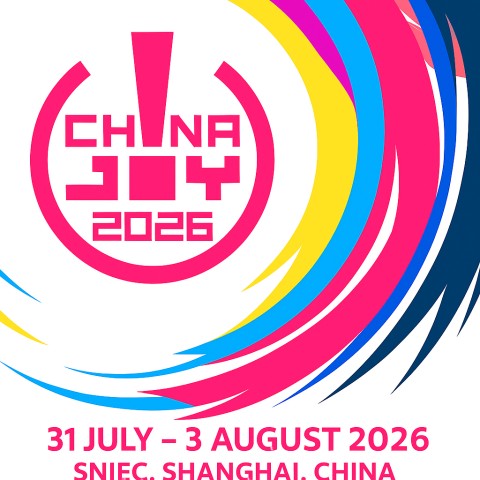
ChinaJoy 2026 — July 31 to August 3, Shanghai
ChinaJoy's BTOB hall is the largest dedicated gaming and digital entertainment B2B deal-making environment in Asia. For AdTech companies with mobile gaming clients or prospects, the concentration of Chinese gaming publishers, UA leads, and technology procurement decision-makers in one room — in execution mode, ready to make platform decisions — is not replicated anywhere else in the global event calendar.
The "Level Up With AI" theme for 2026 creates a specific thematic alignment for AdTech companies with AI capabilities. The buyers attending ChinaJoy's BTOB hall in 2026 include exactly the kind of sophisticated performance advertisers who are actively evaluating AI-driven UA platforms, creative optimisation tools, and measurement solutions.
InnoEx Vietnam 2026 — August 19 to 20, Ho Chi Minh City
InnoEx is Southeast Asia's premier innovation and technology exhibition. For AdTech companies and digital marketing technology providers with Southeast Asian market ambitions, InnoEx provides a genuinely unique combination of access: Vietnamese and ASEAN-based business leaders, international investors deploying capital into the region, and government policy stakeholders shaping Vietnam's digital economy framework.
Vietnam's digital economy is growing rapidly, with the country's GDP growing at 7.96% in Q2 2025 — the fastest rate in 15 years. For AdTech companies looking to establish Southeast Asian market presence before the competitive density catches up with the opportunity, InnoEx 2026 represents one of the most cost-efficient access points available. EventsFreeby manages InnoEx participation for international companies — from booth design through on-ground support.
GTC Shanghai 2026 — November, Shanghai
GTC Shanghai is the Asian traffic conference that has been consistently outperforming Western equivalents on cost-per-qualified-contact throughout 2026. The November Shanghai edition is the larger, more internationally attended of the two annual GTC editions, drawing cross-border e-commerce brands, Chinese gaming publishers, and international performance marketing buyers simultaneously.
For AdTech companies that have not yet attended GTC, the November Shanghai edition is the highest-priority remaining event on the 2026 calendar for companies with Asian market objectives. The window of low competitive density for international exhibitors — where your share of voice per dollar invested is still significantly higher than at Western equivalents — remains open but is narrowing as more international companies recognise GTC's commercial value.
EventsFreeby's GTC Shanghai 2026 participation services handle the full logistics picture — booth design, international freight, Chinese customs clearance, and on-ground support — so your team arrives focused on conversations rather than operations.
DMEXCO 2026 — September 23 to 24, Cologne
DMEXCO remains the essential European digital marketing and AdTech event. For companies where European market presence is a strategic priority, no event aggregates European CMOs, agency heads, publisher executives, and platform decision-makers at comparable scale.
The caveat from H1 2026 experience applies here: DMEXCO's value is highest for companies where brand presence and senior relationship cultivation — rather than immediate pipeline generation — are the primary objectives. Companies attending DMEXCO specifically for pipeline should invest heavily in pre-event outreach, targeted meeting scheduling, and a post-event follow-up process that begins before the event closes.
Tokyo Game Show 2026 — September 17 to 21, Chiba, Japan
TGS 2026's first ever five-day format and the 30th anniversary milestone create a higher-visibility edition than usual. For AdTech companies serving the gaming vertical, the concentration of Japanese publishers, international game studios, and gaming technology procurement decision-makers across the five-day event — including two dedicated Business Days — creates a commercially productive environment for gaming-adjacent AdTech conversations.
The TGS Business Matching System generated 88,977 meeting requests from 74 countries in 2025. For companies that use the pre-event matching infrastructure effectively — arriving with 15 to 20 pre-booked meetings before the floor opens — the cost-per-qualified-contact economics at TGS are among the strongest in the Asian gaming conference calendar.
Affiliate World Asia 2026 — December, Bangkok
Affiliate World Asia is the year's final major gathering of the global performance marketing and affiliate ecosystem. The Bangkok edition in December draws 5,500+ attendees with a commercially intense, buyer-focused culture that produces higher qualification rates than most generalist marketing events.
For AdTech companies closing out their 2026 partnership development calendar, Affiliate World Asia serves as both a relationship consolidation event — deepening connections built at earlier events in the year — and a new partnership sourcing opportunity with the global affiliate community in Asia.
What Separates Companies That Win at AdTech Events from Those That Don't
Every event on the H2 2026 calendar above is genuinely worth attending for the right company. But the event is only as good as the preparation and execution that surrounds it. In H1 2026, the performance gap between companies generating strong event ROI and those generating disappointing results was not primarily about which events they attended. It was about how they showed up.
The Pre-Event Meeting Window Is Where Most ROI Is Created
The companies generating the best B2B outcomes from AdTech events in 2026 are not showing up and hoping the event does the work. They arrive with pre-booked meeting calendars — 15 to 20 targeted conversations scheduled before the exhibition floor opens.
This requires knowing your target company list before you travel, using the event's matching infrastructure aggressively in the weeks before, and framing your pre-event outreach in terms specific enough that a prospect books a meeting because the conversation is relevant to a problem they are actively trying to solve — not because you sent a generic "let's connect at the event" message.
The quality difference between a pre-booked conversation and a walk-in conversation is significant. Pre-booked conversations start from a specific context. Walk-in conversations start from zero. At an event where you have 48 hours of floor time across two business days, the ratio of pre-booked to walk-in conversations largely determines your lead quality outcome.
Your Booth Needs to Answer One Question in Three Seconds
The most common feedback from AdTech companies that underperformed at H1 2026 events was that their booth failed to communicate what they do clearly enough for a passing prospect to decide whether to stop and engage. This sounds basic. It is remarkably common.
At a packed AdTech exhibition floor, a passing prospect makes a decision about whether to stop at your booth in approximately three seconds. The question they are asking themselves in those three seconds is: "Is this relevant to my problem?" Your booth needs to answer that question — not with your company name and logo, but with a specific claim about the problem you solve and the result you deliver.
"AI-powered CTV attribution" is more likely to stop the right person than "Marketing Technology Solutions." "Reduce your mobile UA cost per install by 30%" is more likely to generate a conversation than "Performance Marketing Platform." The specificity of your booth communication is a direct input to your event ROI.
The 48-Hour Follow-Up Window Still Determines Everything
Every event review we publish comes back to this principle because every event we track confirms it. Leads not contacted within 48 hours of an event closing have a dramatically lower conversion rate than those contacted immediately. The window is not generous. It does not stay open while you recover from jet lag or catch up on internal emails.
The companies generating the strongest post-event conversion rates from H1 2026 events had their follow-up sequences built before they left for the conference. The person responsible for follow-up was identified before the event. The email or message template was written before the event. The CRM tagging system was agreed before the event.
This level of preparation sounds excessive until you run the numbers on what each qualified lead from an international event costs — and then multiply the number of those leads that go cold because follow-up didn't happen fast enough.
International Event Logistics Are a Hidden ROI Variable
For events in Asia — GTC Shanghai, ChinaJoy, InnoEx, TGS — the operational complexity of international exhibition participation is a genuine ROI variable that most companies underestimate until they experience it directly.
Booth materials entering China require customs documentation that is specific, detailed, and unforgiving of errors. Japan's Makuhari Messe has venue regulations that are meticulous and time-sensitive. Vietnam's logistics infrastructure for international freight has specific requirements that differ from more established markets. In every case, the companies that manage these logistics without specialist support routinely report spending significant time and energy on operational problem-solving during events when they should be having commercial conversations.
EventsFreeby was built to eliminate this variable. Our end-to-end international event participation services — booth design and fabrication, international freight forwarding, customs clearance for Asian markets, local vendor coordination, and on-ground support — exist specifically to ensure that the operational complexity of international exhibition never becomes a drain on your team's commercial energy.
Explore our international event participation services or post your event requirements to start planning your H2 2026 event calendar.
The Mid-Year Conclusion: What 2026 Is Teaching the AdTech Events World
Six months in, 2026 has reinforced several things we suspected and revealed a few we didn't fully anticipate.
The biggest confirmation is that audience concentration beats audience size — consistently, measurably, and across every event format we've tracked. The events generating the strongest ROI are not the ones with the most attendees. They are the ones where the right attendees are most densely concentrated around a specific commercial problem.
The biggest surprise is how quickly the Asian event circuit has moved into serious consideration for Western AdTech companies. The combination of GTC's concentrated Chinese advertiser audience, InnoEx's Southeast Asian market access, and ChinaJoy's massive gaming B2B infrastructure is creating an Asian event ROI story that a growing number of international AdTech platforms are discovering for the first time in 2026.
The most important operational lesson is that the 48-hour follow-up window is not improving. If anything, the volume of event interactions and the speed at which attention moves post-event has made the first 48 hours more commercially critical than ever. The companies treating post-event follow-up as a post-travel activity are systematically underconverting their event investments.
And the most important strategic lesson is that the best H2 2026 event calendars are not built around which events are prestigious or which events everyone attends. They are built around which events put your specific product in front of your specific buyer — in a room where that buyer is in execution mode, not observation mode.
That is what event ROI looks like when it's working. And in H2 2026, the rooms where that condition is most reliably met are the focused programmatic summits, the Asian traffic conferences, the curated gaming industry business events, and the specialist affiliate and performance marketing gatherings that prioritise deal flow over keynote entertainment.
The rest of 2026 is yours to allocate well.
Ready to plan your H2 2026 international event strategy? Visit EventsFreeby to explore our end-to-end event participation services across Asia, Europe, and the Middle East. From ChinaJoy and GTC Shanghai to InnoEx and Tokyo Game Show, our team handles every operational detail so your team can focus entirely on commercial outcomes. Or post your event requirements to get started.
Published on Jun 17, 2026